

A laser hair removal appointment involves more than passing a device over unwanted hair. You will learn what happens before, during and after treatment, how to prepare your skin, what each pulse feels like, and why results develop across several appointments rather than one visit.
Key takeaways
- Expect a skin and medical assessment before treatment begins.
- Avoid tanning and follow the provider’s shaving and skincare instructions.
- Laser pulses target growth-phase hairs, so several sessions are needed.
- Confirm device suitability, practitioner qualifications, safety measures, and aftercare.
What happens before the laser hair removal appointment?
The laser hair removal appointment begins with a medical and skin assessment, not a pulse of light. The practitioner asks about medicines, recent sun exposure or tanning, keloid scars, cold sores, skin sensitivity, skin colour, hair colour, and the body area you want treated. These details guide device choice, settings, and safety decisions.
- The practitioner examines the treatment area for hair density, irritation, infection, moles, and pigment changes.
- Ask whether a patch test is needed. It is especially important when your skin is recently tanned, darker, sensitive, or prone to light or dark marks, because excess pigment can increase the risk of burns or uneven colour.
- Shave or trim the hair close to the skin before the appointment, following the clinic’s timing instructions. Shaving removes the visible shaft but leaves the follicle and its pigment target in place.
- Stop waxing, plucking, threading, and epilating for several weeks beforehand. These methods remove the hair or root target that the laser needs to heat.
- Avoid deliberate tanning and protect exposed skin from ultraviolet light with broad-spectrum sunscreen. Recently tanned skin contains more pigment and is harder to treat safely.
Tell the practitioner if you develop a cold sore, rash, sunburn, or skin infection before the visit. The laser hair removal process may need to wait until the area has healed.
What are the laser hair removal steps during treatment?
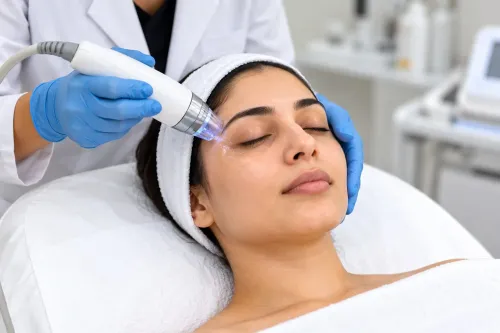
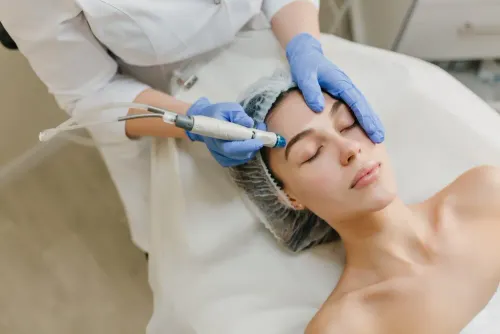
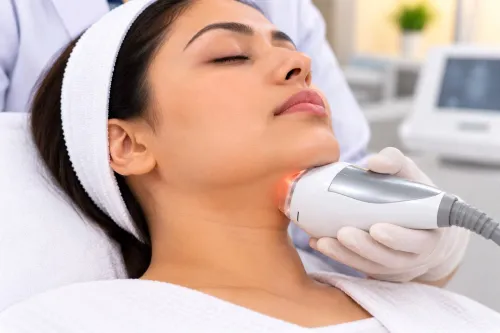
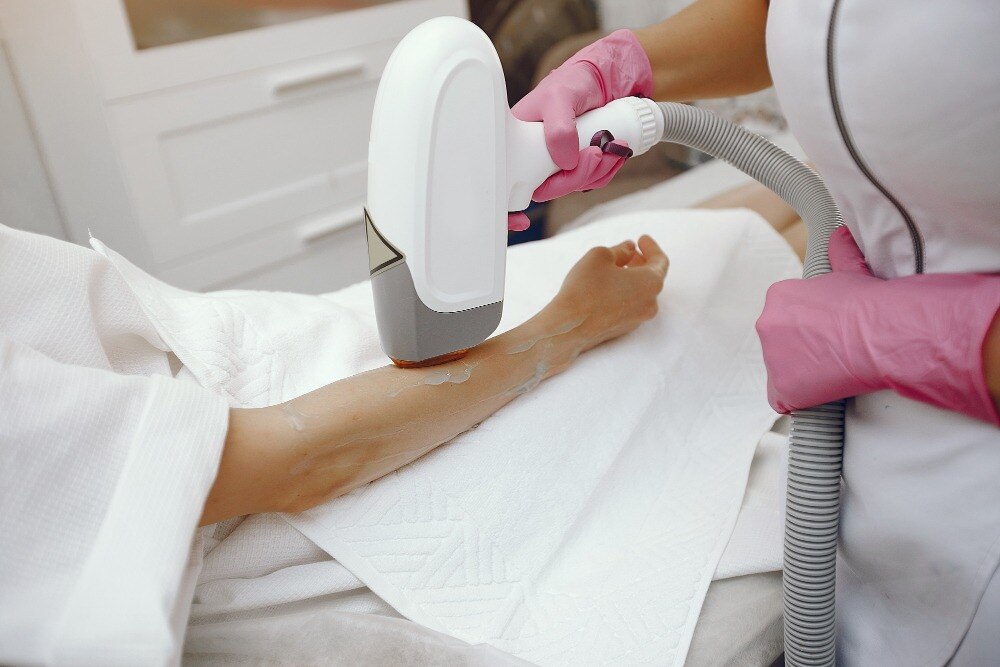
The laser hair removal steps are practical: each stage prepares the skin, protects your eyes, or delivers controlled heat. This is what happens during laser hair removal for sessions:
1. The practitioner cleanses the treatment area and marks it when precise borders or sections are needed. The handpiece and settings are chosen for your skin colour, hair colour and body area.
2. You and the operator put on wavelength-appropriate protective eyewear. The laser light targets melanin in the hair, so correct eye protection matters even when the treatment area is small.
3. The skin is cooled with a cooling tip, chilled air or cooling gel. A topical anaesthetic may be discussed for a particularly sensitive area. Cooling protects the surface and reduces the heat and discomfort caused by each pulse.
4. The operator delivers a few test pulses and checks your skin’s response before treating the full area. Tell them immediately if the heat feels unusually intense.
5. The handpiece is placed against the skin, and repeated pulses treat one section at a time. You may feel snapping, stinging or a rubber-band flick as light becomes heat around the follicle.
6. Redness and small swollen bumps around individual follicles show an immediate skin response. They do not mean every visible hair has disappeared; treated hairs shed later.
An upper-lip session may take only a few minutes. Underarms or a bikini area often take about 15–30 minutes, arms or legs take longer, and a back may take roughly 30–60 minutes, depending on area, hair density and device.
What happens to your skin and hair after one session?
Immediately after a laser hair removal appointment, treated skin can feel warm and look red, with small swelling centred on individual follicles. This response usually settles within hours, but follow the clinic’s cooling instructions rather than applying unapproved products.
Treated hairs do not vanish immediately. Some shed from the follicle over the following days or weeks; regrowth can appear slower, finer or patchy as the laser hair removal process affects susceptible follicles.
Aftercare checklist:
- Use the cooling method your clinic recommends, such as a cool compress for the stated duration.
- Do not pick, scratch or aggressively scrub the treated area.
- Avoid tanning and deliberate ultraviolet exposure after treatment.
- Cover exposed skin and apply broad-spectrum sunscreen according to the clinic’s instructions.
Ultraviolet exposure increases irritation and the risk of light or dark pigment changes, especially while treated skin is recovering. Contact the clinic promptly for blistering, crusting, worsening pain, spreading redness, pus, fever, scarring, or light or dark patches that persist rather than fade.
These signs can indicate a burn, infection or a longer-lasting skin reaction and need clinical assessment.
Why do you need several laser hair removal appointments?
One session cannot treat every follicle equally because hair follicles cycle through different growth phases. Laser energy works best when a hair is in the active growth phase, but follicles are not synchronised. Later appointments catch follicles that were resting or otherwise less susceptible during the first visit.
The laser hair removal process therefore uses a course of roughly four to six treatments, with appointments commonly spaced about four to six weeks apart. Your body site and the pattern of regrowth determine the timing; facial hair and body hair do not follow identical cycles.
Between appointments, follow these rules:
- Shave or trim regrowth close to the skin. Shaving leaves the follicle and its pigment target in place, so the next treatment can heat it.
- Do not wax, pluck, thread or epilate between sessions. These methods remove the hair or root target that the laser needs, reducing what the next treatment can treat.
- Do not judge the result by immediate smoothness. The goal is long-term hair reduction, not guaranteed permanent removal.
Some hairs may return finer or lighter, and maintenance sessions can keep regrowth controlled. Hormonal conditions such as polycystic ovary syndrome can stimulate new hair growth, making maintenance more frequent or the overall course longer. The laser hair removal steps are repeated only as new susceptible follicles enter the active phase.
What should you confirm before choosing a laser hair removal provider?
Before booking a laser hair removal appointment, ask which device and wavelength will be used, how settings are chosen for your skin colour and hair colour, and how recent tanning affects eligibility. Recently tanned skin absorbs more energy and can burn or develop light or dark patches.
Use these consultation questions:
- Is a patch test indicated for my skin tone, treatment area or tanning history?
- Will you use a cooling tip, chilled air or cooling gel?
- What happens during laser hair removal for sessions on this area, including test pulses and aftercare?
- What result is realistic for my hair colour?
Dark hair usually responds more reliably because it contains melanin, the pigment that absorbs laser energy. Blonde, white, grey and red hair contain less usable melanin. Appropriately selected systems can treat many darker skin types, but the wavelength and energy settings must be chosen carefully.
| Laser | Uses a specific wavelength or narrow wavelength range | Settings target hair while limiting heat to surrounding skin |
|---|---|---|
| IPL | Emits a broad spectrum of light | Its device settings and safety considerations are not interchangeable with laser treatment |
Ask about paradoxical hypertrichosis: uncommon denser or darker growth near the treated area, reported especially after facial treatment and in some darker skin types. Someone considering Derma Solutions Nashik can take these questions to a consultation and judge the clinical explanation rather than choosing from device marketing alone.
Related service
Laser hair removal is a popular treatment for long-term hair reduction. View service → |
Frequently asked questions
What happens before a laser hair removal appointment?
The practitioner reviews your medicines, sun exposure, tanning, scars, cold sores, skin sensitivity, skin colour, hair colour, and treatment area before choosing settings.
What are the laser hair removal steps during treatment?
The provider cleans and prepares the skin, gives you protective eyewear, tests or selects suitable settings, and delivers pulses across the treatment area.
What happens to your skin and hair after one session?
Treated skin can look red or feel warm for a short time. Targeted hairs shed gradually rather than disappearing immediately.
Why do you need several laser hair removal appointments?
Laser works best on hairs in the active growth phase, and different hairs enter that phase at different times.
What should you confirm before choosing a laser hair removal provider?
Ask who performs the treatment, which device suits your skin and hair, how settings are selected, what safety precautions apply, and what aftercare you will receive.